**See the RFP for Round 1 sites Here**
What is a Community Resilience Hub?
Community Resilience Hubs are locations that provide resources or access to resources to people in the immediate surrounding community during normal times as well as during and after a disaster or disruption. Often these locations are community centers, houses of faith, or fire departments, where residents gather for events, meetings, and fellowship. A resilience hub helps to connect the residents to each other, and to resources outside the community when the community is in “normal,” or “blue sky” times. During and immediately following a disruption, known as “grey sky days,” these locations provide additional community support in a variety of ways; including distributing supplies, providing access to power and communications, medical care, and in some cases, shelter. As the community moves through response and into recovery from the disruption, resilience hubs will help community members to connect to additional resources, continue to distribute needed supplies, and provide a place for the community to convene and coordinate their recovery.
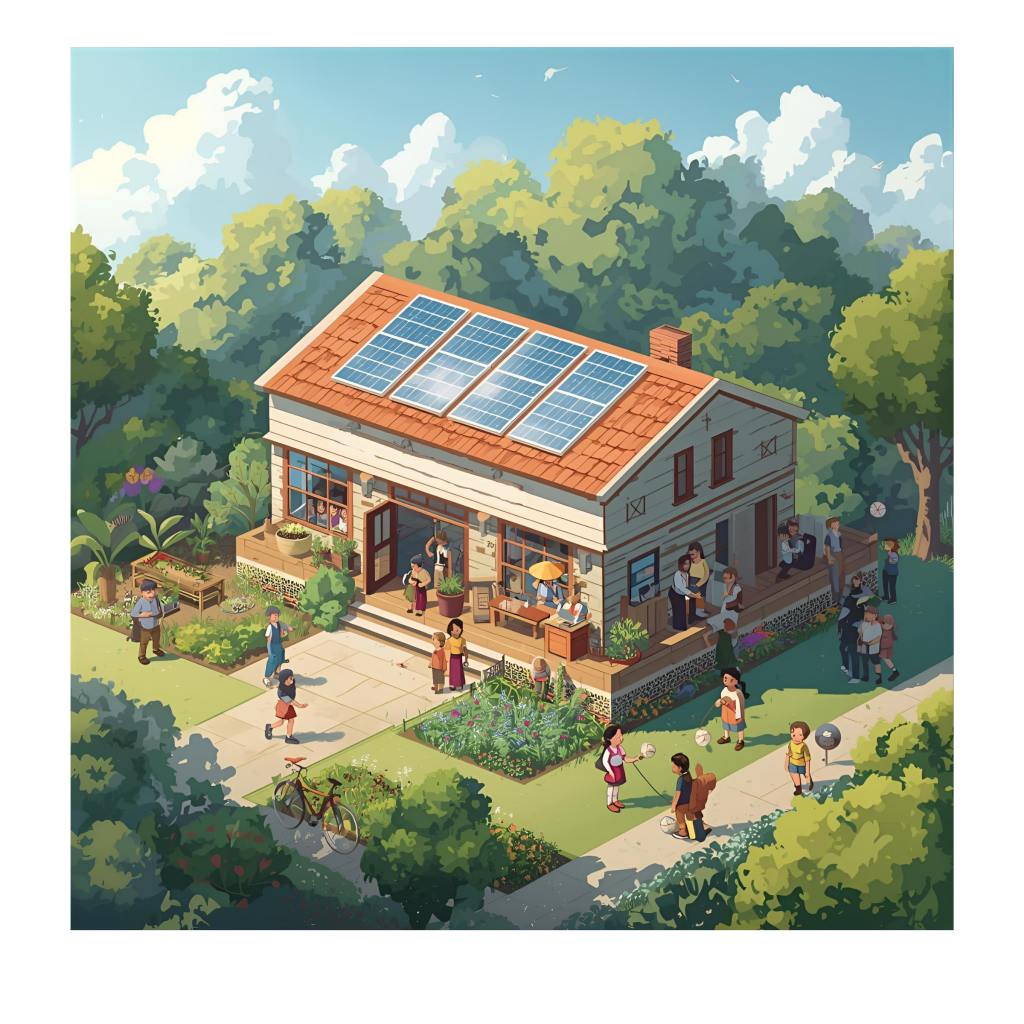
A key component of this resilience hub design, is the site having energy options that allow it to continue to power needs when the grid is unable. Resilient power could be as simple as a fossil-fuel generator and a large supply of fuel, or could be a larger system that utilizes clean energy generation and battery storage as a primary backup, with a fuel-based generator connected to help provide uninterruptible power to a facility, often referred to as a microgrid. As we learned in the aftermath of Helene, fuel supply for generators can be a major challenge, making a system that can generate electricity from sun, wind, or other renewable resources increasingly viable. We have spent the last three years educating our communities about resilience hubs, microgrids, and community resiliency. The damage and long-lasting impacts from Helene shone light on these needs, and have provided us with a funding opportunity to deploy solar+storage microgrids in many impacted communites in Western North Carolina.
About the Project
Through a collaboration between Land of Sky Regional Council (LOSRC), the North Carolina Sustainable Energy Association (NCSEA), Footprint Project (FP) and a deep network of regional partners, the North Carolina Department of Environmental (NCDEQ) is investing $5 Million in permanent and mobile microgrids to provide flexible energy resilience in the aftermath of Hurricane Helene. Up to twenty-four stationary microgrids will be installed across six Helene-affected counties, and two mobile “Beehive” microgrid hubs will be installed to serve the entire state of North Caroline during future disasters (one in Western North Carolina and one in Eastern North Carolina). This innovative approach to disaster recovery and resilience will improve emergency energy access for critical community services serving thousands of North Carolinians, in recovery from and preparation for future storms. This project will highlight the ways that solar + storage systems help communities when grid power is lost by energizing community hubs and first responder facilities, and provide resiliency in the region for blue and grey sky days. The goal of the project is to deploy mobile and fixed microgrid systems to support disaster response in counties heavily affected by hurricane Helene.
The project kicked off in July, and we have selected the first round of sites and released the RFP for contractors to respond to. A second round of site selections is expected in January of 2026, with a RFP to follow. We hope to start work on the Round 1 sites in the spring of 2026. Below are links to the current engagement opportunities with the project and the current RFP. Requests will continue to be taken on a rolling basis throughout this project. Our goal with the DEQ investmenty is to showcase the viability of this technology, and to start the process of building out these facilities across the state with additional future funding.
- Request for Resilient Power
- Vendor Registration Form
- Technical Advisory Council Interest Form
- Public Feedback/Comment Form
Frequently Asked Questions
Q: What Counties are eligible for the current (2025-26) DEQ program?
A: Rutherford, Buncombe, Madison, Yancey, Mitchell, and Avery counties are eligible for permanent installations. The western “Beehive,” can reside anywhere in WNC that is able to respond to needs in the western half of the state.
Q: What is the cost-share for the current (2025-26) DEQ program?
A: There is no cost-share for eligible sites that are selected, the program will reimburse 100% of the applicable project funds.
Q: If I am NOT in an eligible county, should I fill out the survey?
A: Yes! The data that we are collecting in that survey are being used for the DEQ opportunity, as well as for other funders and future funding opportunities. We want to have an exhaustive list of sites that would like to be resilience hubs and host microgrids for resilient power. A couple locations have already been picked from the list and funded by other groups and are under construction!
Q: When will the Beehive part of the project commence?
A: The initial subcontract for the Beehive has been completed and procurement is expected to start after the first of the year. We expect that this opportunity will also have multiple RFPs issued, based on initial procurement needs.
Q: When does this project end?
A: The current phase of the project, funded by NCDEQ, will be completed by spring of 2027. We continue to work with partners and funders to develop more of these systems and hope to continue the work well after the current funding is exhausted.